Search in blog
Blog categories
Latest posts
Find the best commercial restaurant equipment for busy UK kitchens, from ovens and refrigeration to prep, warewashing...
Best Price Guarantee
We have a 14 Day return Policy
Minimum 1 Year Parts Warranty
From £500 to £100,000 Apply in 2 Minutes!
When a site is opening, refitting or replacing failed kit, a clear commercial kitchen equipment list saves time and prevents expensive gaps. It is not just about buying the biggest oven or the cheapest fridge. The right list reflects your menu, service style, kitchen size, power supply, staffing and peak covers.
For most operators, the pressure is the same - get fully operational, avoid downtime and keep costs under control. That means focusing first on what the kitchen must have to trade safely and efficiently, then adding the equipment that improves speed, consistency or capacity. A café, takeaway, hotel kitchen and care home catering unit all need different priorities, even if some core categories stay the same.
A practical commercial kitchen equipment list starts with the workflow. Goods come in, chilled and frozen stock is stored, ingredients are prepped, food is cooked, plated, served and cleared down. If one stage is under-equipped, the whole operation slows.
That is why equipment buying should be grouped by function rather than by what looks most urgent on a supplier page. Heavy cooking equipment may feel like the headline purchase, but prep machines, sinks, tables, shelving and warewashing are just as critical once service begins.
It also pays to separate essential equipment from nice-to-have equipment. A combi oven may be the right long-term choice, but a smaller operation might trade more profitably with a solid convection oven, a griddle and adequate refrigeration if budget is tight. Getting the basics right first is usually the better commercial decision.
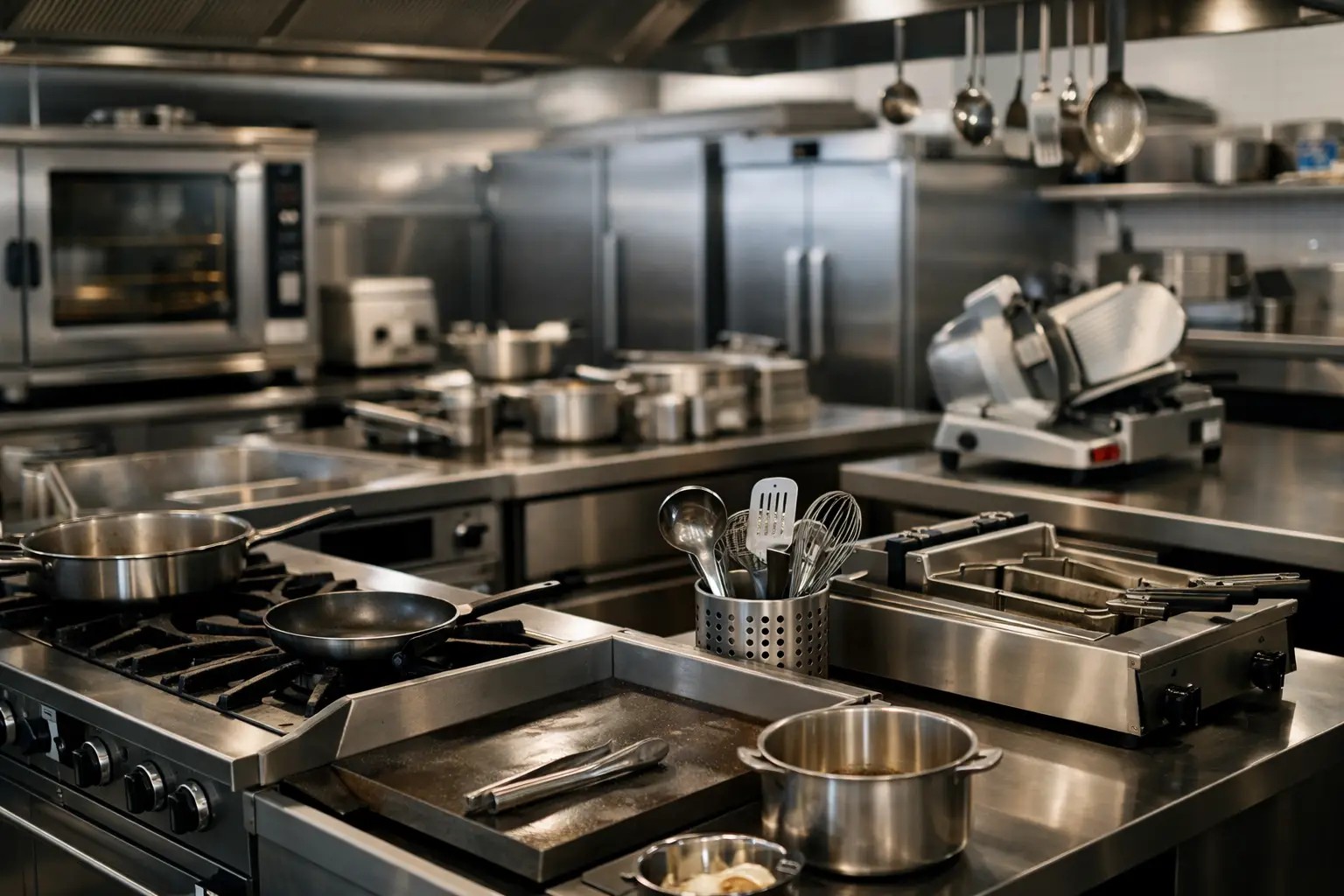
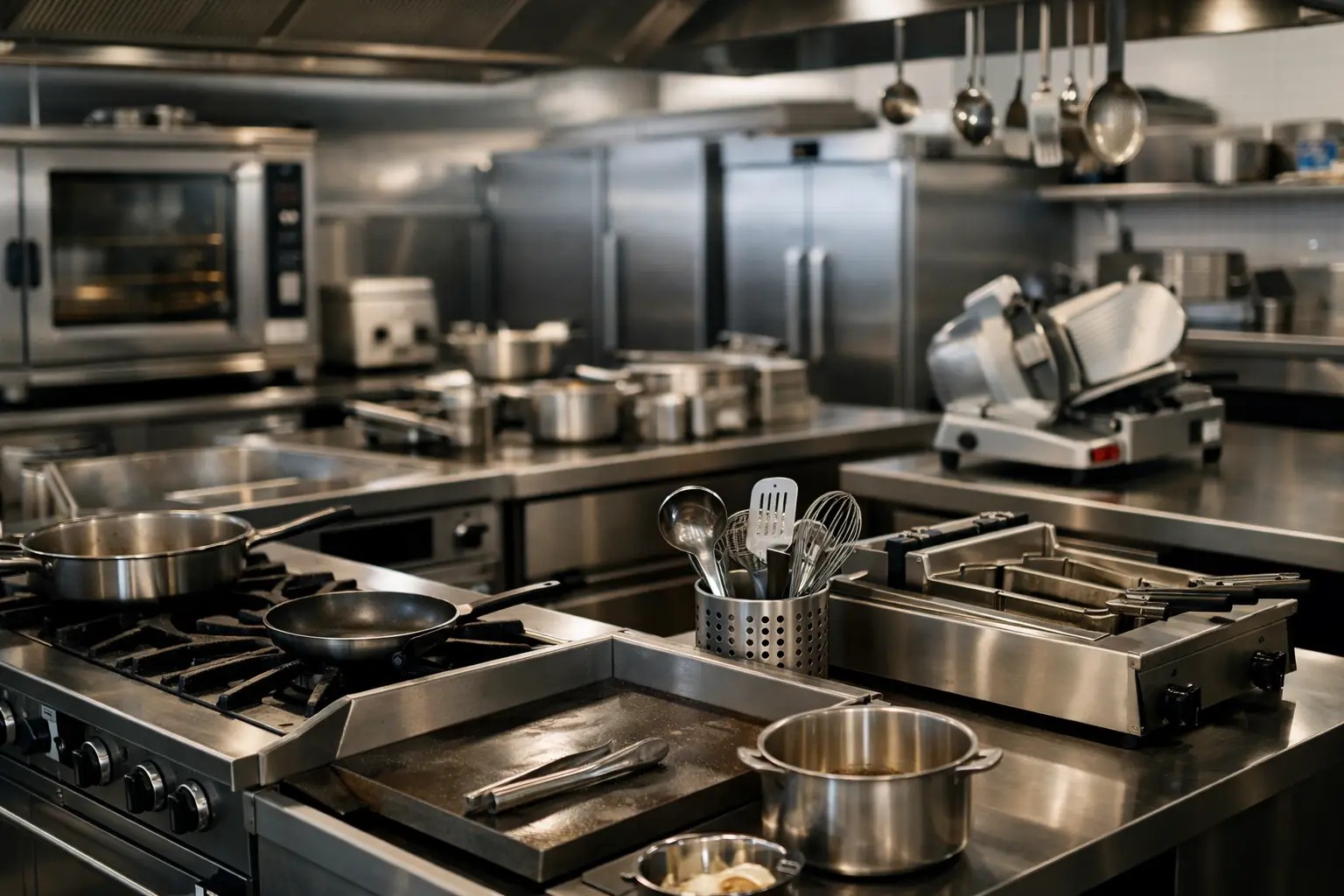
The core of most kitchens is the cooking line. Your list here depends heavily on menu and output. Restaurants and hotels may need ovens, ranges, salamanders and chargrills, while takeaways may prioritise fryers, kebab machines, hot holding and fast-turnaround countertop kit.
For many sites, commercial ovens are the first major purchase. Convection ovens suit straightforward baking and roasting, while combi ovens offer more control and menu flexibility. They can justify the higher spend where consistency, regeneration and volume matter. If your kitchen produces mixed service across breakfast, lunch and evening trade, that flexibility can reduce pressure on the line.
Commercial fryers are vital for pubs, takeaways and quick-service sites. Capacity, recovery time and filtration all matter more than headline price once service gets busy. A lower-cost fryer can become expensive if it struggles through peak periods or burns through oil too quickly.
Griddles, chargrills, induction hobs and petrol cookers should be chosen according to menu and extraction setup. Petrol remains popular for chefs who want instant visual control, but induction can be a strong fit for energy efficiency, cleaner working conditions and faster wipe-downs. The right choice depends on infrastructure as much as preference.
Holding equipment also deserves a place on the list. Bain maries, heated cupboards, hot cupboards and heat lamps help maintain service pace without compromising food quality. These are often overlooked in first-time fit-outs, then added later when bottlenecks appear.
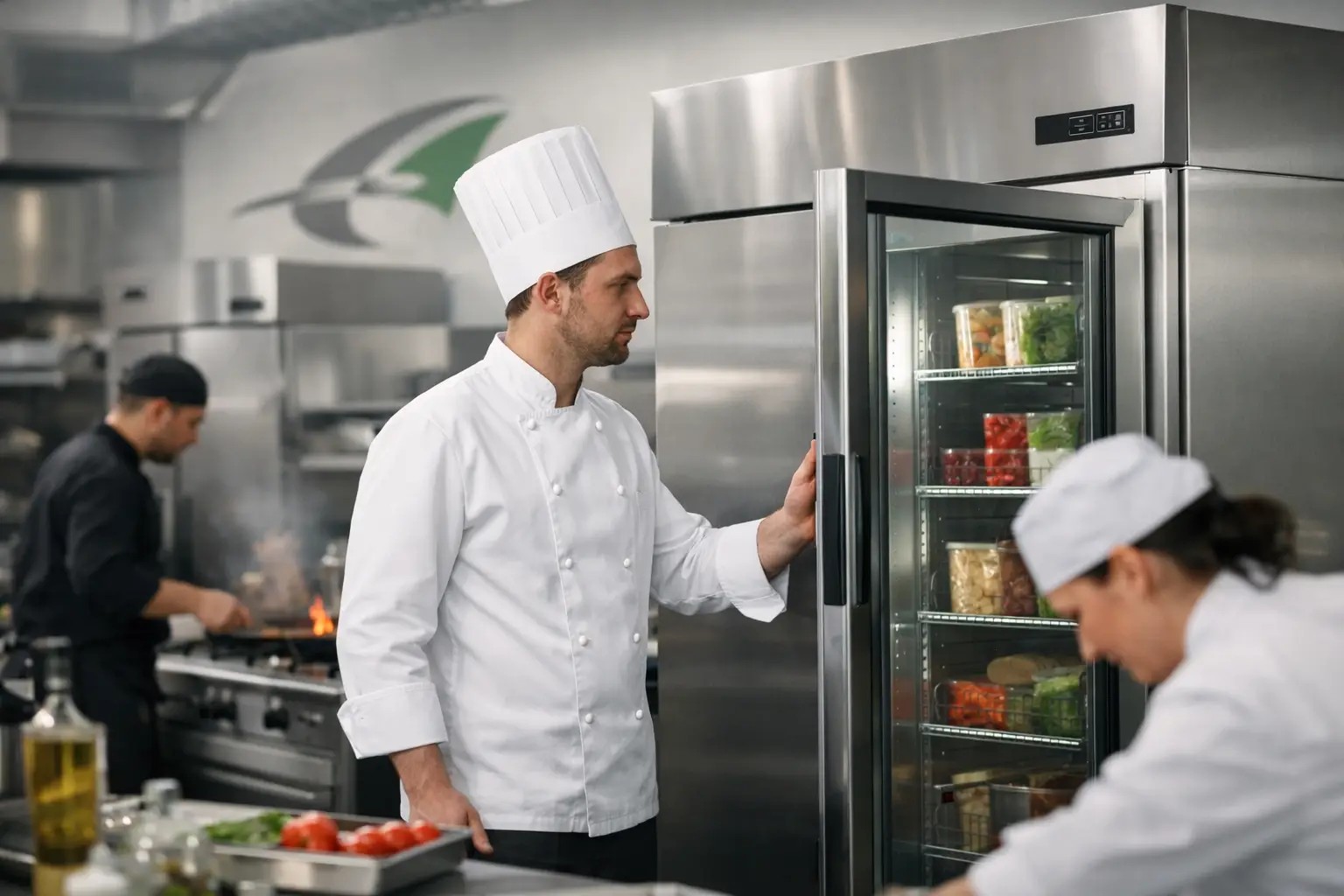
If cooking equipment drives output, refrigeration protects stock, food safety and margin. A weak refrigeration setup leads to waste, disorganisation and avoidable service problems.
A standard list usually includes upright fridges and freezers, undercounter units, prep counters and cold rooms where volume requires them. The mix depends on available space and stock profile. Small kitchens often benefit from undercounter refrigeration near the pass or prep area, while larger sites need higher-capacity upright or walk-in storage to support deliveries and bulk buying.
Display refrigeration may also matter if customers see the product before they buy it. Cafés, bakeries and grab-and-go sites need chilled display units that hold temperature properly while still merchandising food well. It is a practical buying decision, not just a visual one.
Look carefully at usable capacity, door format, kitchen ambient rating and cleaning access. A fridge that performs well in a cool prep area may struggle on a hot cookline. In busy kitchens, durability and recovery speed are often worth paying for.
Prep equipment is where labour efficiency is won or lost. If staff are spending too long slicing, mixing, peeling or portioning by hand, output drops and wage cost rises.
Most commercial kitchen equipment lists should include stainless steel preparation tables, chopping stations and shelving as a starting point. Beyond that, the right machinery depends on volume. Planetary mixers are common in bakeries, pizzerias and dessert-led sites. Food processors, vegetable preparation machines, stick blenders, slicers and potato peelers make sense where repetitive tasks can be standardised.
For butcher-style operations, deli counters or sites producing large volumes of cooked meats, meat slicers and mincers can be essential. Vacuum packing equipment may also be worth considering for portion control, storage life and prep-ahead systems. It is not right for every kitchen, but for some operations it supports both consistency and waste reduction.
The key trade-off is simple. If a machine is only used occasionally, it may take up space better used elsewhere. If it saves hours every week, it quickly becomes a smart purchase.
No professional kitchen runs properly without dependable washing and hygiene equipment. This part of the list is easy to underestimate until service starts and clean crockery, cookware or glassware runs short.
Undercounter dishwashers suit smaller cafés, bars and low-volume sites. Pass-through dishwashers and conveyor systems are better suited to larger kitchens, schools, hotels and contract catering settings where throughput is high. Glasswashers are often essential in bars and front-of-house beverage operations, where speed and presentation both matter.
A complete setup should also include sinks, hand wash basins, tabling, rinsing accessories and suitable water treatment where required. In hard water areas, poor limescale control can shorten equipment life and increase maintenance costs.
Hygiene extends beyond washing machines. Cleaning chemicals, bins, janitorial supplies, colour-coded chopping boards, storage containers and clinical hand hygiene products are operational essentials, not add-ons. Buyers who want fewer supply gaps often prefer to source heavy equipment and day-to-day consumables together for exactly this reason.
Some of the most important purchases are the least glamorous. Extraction can determine which cooking equipment is viable. Stainless steel tables, cupboards, sinks and shelving shape the workflow of the entire kitchen. Racking and storage affect stock rotation, cleanliness and speed during prep.
A well-planned kitchen should include wall shelves, ingredient bins, mobile racking and waste handling equipment where needed. These are not headline purchases, but they support safer and more efficient service.
Space planning matters here. Oversized equipment can reduce staff movement and create pinch points. Undersized benches and storage can lead to clutter, poor prep organisation and hygiene risks. Before buying, measure doorways, access routes, service corridors and final installation space - not just the kitchen footprint.
Not every commercial kitchen equipment list stops at the back door. If you run a café, hotel, school or takeaway, service equipment matters too.
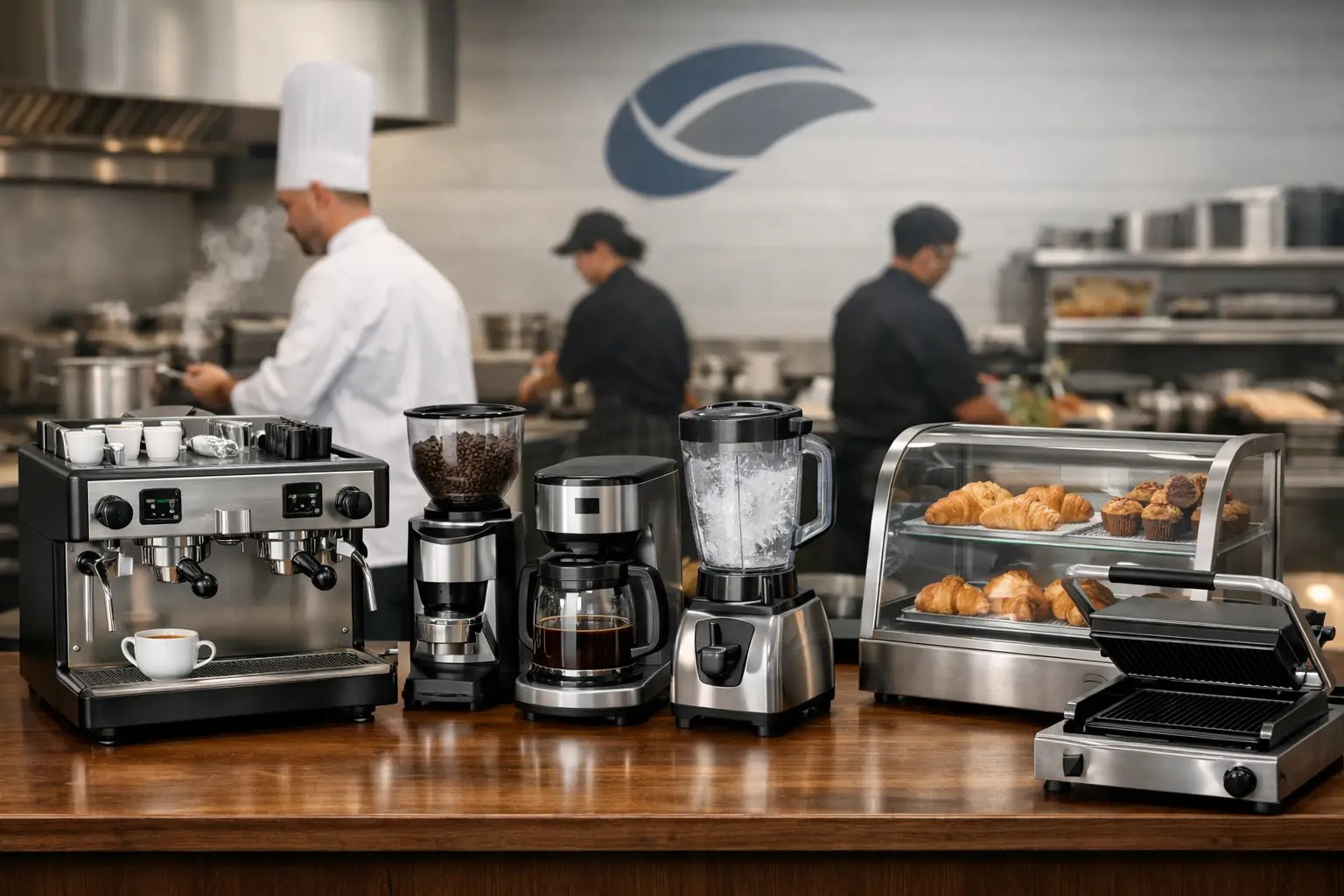
This may include hot display units, chilled display cabinets, beverage machines, ice machines, soup kettles, tills, serving counters, tableware and trays. In many operations, front-of-house equipment has a direct impact on speed of sale and average transaction value.
For buffet or servery setups, heated gantries, food wells and mobile service counters can be just as important as what is happening in the main kitchen. Again, the right setup depends on service model. A self-service environment needs different equipment from a plated restaurant operation.
Before placing an order, confirm utility requirements, dimensions, output expectations and warranty terms. It sounds obvious, but delivery and installation problems often come from assumptions made too early.
Power supply is a common issue. A kitchen may want electric equipment for simplicity, but the site may not have the right capacity in place. Petrol equipment may suit the menu better, but only if installation and extraction are already workable. Drainage, ventilation and water quality can also affect equipment choice.
Lead time matters as well. If a failed fridge or dishwasher is putting service at risk, speed of fulfilment is not a bonus - it is part of the buying decision. That is why many operators choose suppliers with broad stockholding, recognised brands and next day options, especially when replacing essential kit under pressure.
Budget should be viewed across the life of the equipment, not just the purchase cost. Cheaper units can be right for lighter use, but in high-output kitchens the better value often comes from stronger build quality, lower downtime and better energy performance. Finance or leasing can also make sense on larger purchases if it protects cash flow during an opening or refurbishment.
A restaurant kitchen will usually need a balanced mix of ovens, refrigeration, prep tables, warewashing and holding equipment. A takeaway may lean more heavily on fryers, contact grills, hot holding, extraction and fast prep tools. Schools, care homes and contract caterers often need higher-capacity cooking and washing systems, with reliability and consistency taking priority over menu theatrics.
For new openings, it is often easier to build the list in phases: must-trade equipment first, workflow support equipment second, then optional upgrades once the operation settles. Suppliers such as Next Day Catering are set up for this kind of staged buying, with the range to cover heavy equipment, tabletop, cleaning products and everyday essentials in one place.
The best list is the one that fits the way your kitchen actually works. Buy for volume, service pressure and staff reality, not for showroom appeal. If each item earns its space, your kitchen will be easier to run from the first delivery onward.